















My lab is interested in immunological memory, autoimmunity and persistent viral disease. The common theme among these topics is a focus on T cell immunity under conditions where specific T cells provide protection upon reencounter with a pathogen (T cell memory), may cause..


Charles F. Burant, M.D., Ph.D. is the Dr. Robert C. and Veronica Atkins professor of Metabolism. Dr. Burant received his bachelor's degree from the University of Wisconsin and his graduate and medical degrees from the Medical University of South Carolina in Charleston. He ..


Dr. Bell is also Louis Block Professor of Biochemistry and Molecular Biology, Medicine, and Human Genetics at the University of Chicago. He received his B.Sc. degree in zoology and M.Sc. degree in biology from the University of Calgary, Canada. H..


Dr. Martin Myers, U-M's Associate Professor of Internal Medicine and Associate Professor of Molecular and Integrative Physiology, conducts innovative research on insulin resistance. For the 15 million Americans who have diabetes, treating insulin resistance would extend an..


His 39 page curriculum vitae would be the first indication that William H. Herman, M.D., M.P.H., is dedicated to his work. The proof lies in his many achievements as an internationally recognized researcher, educator, and clinician in the prevention and treatment of diabet..


Dr. Kulkarni is a Principal Investigator at the Joslin Diabetes Center, Assistant Professor of Medicine and a Faculty Member of the BBS Graduate Program at Harvard Medical School. Dr Kulkarni graduated with MD and PhD degrees from St. John's Medical College and the Royal P..


Dr. Lawrence Chan is the Betty Rutherford Chair for Diabetes Research and and the Director of the NIH-funded Diabetes & Endocrinology Research Center at Baylor College of Medicine. He is also the director of the Molecular Medicine Scholars Program and a pr..


Dr. Piette is a Professor of Internal Medicine at the University of Michigan and a senior research associate at the Ann Arbor VA Center for Practice Management and Outcomes Research. He has conducted a number of multi-site diabetes randomized trials focusing on the use of ..


The current focus of Dr. Wang’s lab is to understand the functional roles of peroxisome proliferator-activated receptors (PPARs) in normal physiology and metabolic diseases in a variety of metabolically active tis..


Amy Wagers, Ph.D., who is emerging as a leading researcher in stem cell biology, exemplifies the value of providing support at that critical juncture in a young scientist’s career. In 2004, she became an assistant professor of pathology at Harvard Med..


As a graduate student in evolutionary biology, Dr. Philip DiIorio studied the genetics of fish adaptation Sonoran guppies. During his post-doctoral work in the Department of Endocrinology at New England Medical Center in Boston and subsequently in the Diabetes Division he..


Dr. Ingolf Bach’s interest in the molecular mechanisms has taken him from Paris, France where he received his PhD from the Pasteur Institute, to California for post-doctoral work, and back to his native Germany as a an Assistant Professor and Heisenberg Scholar at th..


Current Research:
Growth hormone (GH) has long been recognized as the primary regulator of body growth and an important regulator of metabolism. Recombinant GH is now used therapeutically to promote growth in children with short-stature, increase the well-being o..


Dr. Brian Lewis is a faculty member in the Program for Gene Expression and Function and the Program for Molecular Medicine here at UMass Medica..


The laboratory has a broad interest in the molecular cell biology of insulin secretion with emphasis on the role of secretory granule proteins in organelle biogenesis, post-translational processing and regulation of exocytosis. Our focus on molecular mechanisms and cell-sp..


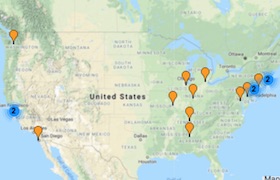
The NIDDK-supported Diabetes Endocrinology Research Centers (DERCs) and Diabetes Research and Training Centers (DRTCs) are part of an integrated program of diabetes and related endocrinology and metabolism research. Centers provide increased, cost effective collaboration among multidisciplinary groups of investigators at institutions with an established, comprehensive research base in diabetes and related areas of endocrinology and metabolism. DERCs and DRTCs are intended to improve the quality and multidisciplinary nature of research on diabetes by providing shared access to specialized technical resources and expertise. Both DERCs and DRTCs are intended to facilitate progress in research with the goal of developing new methods to treat, prevent and ultimately cure diabetes mellitus and its complications.